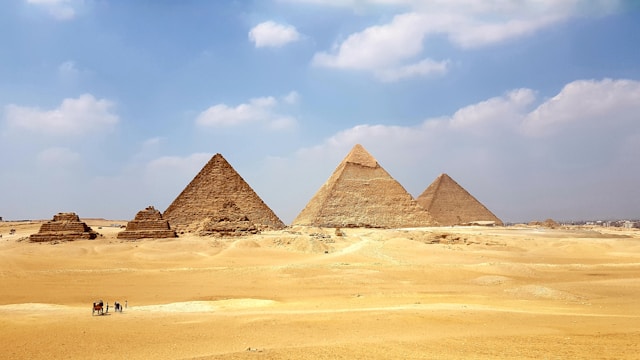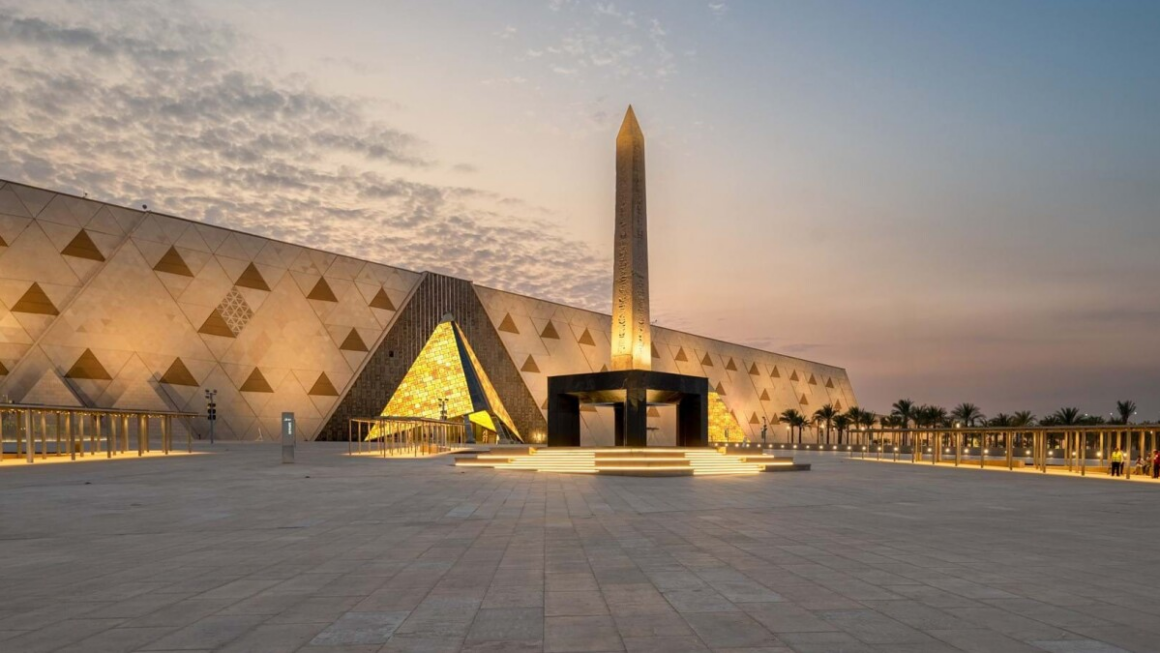
In 2026, Egypt’s ancient past is being viewed through a new public lens. The most visible symbol of that shift is the Grand Egyptian Museum near the Giza pyramids, which officially opened to the public in November 2025 after a long and delayed development process. The museum has quickly become more than a new container for old objects. It is now part of a wider cultural change in how ancient Egypt is presented, consumed, and reimagined for contemporary audiences.
That change matters because interest in ancient Egypt has never depended only on archaeology. It has always depended on mediation: how discoveries are displayed, explained, staged, and connected to public imagination. In earlier decades, that mediation often meant traditional galleries, printed guidebooks, and television documentaries. In 2026, it increasingly includes immersive exhibition design, digital interpretation, official ticketing ecosystems, experience-led museum planning, and a broader tourism strategy that links heritage to modern infrastructure.
The Grand Egyptian Museum sits at the center of this transformation. Official and major news descriptions present it as a vast site dedicated to a single civilization, located close to the Giza plateau and designed to house tens of thousands of objects from across ancient Egyptian history. Reuters reported that the complex includes immersive exhibits and virtual-reality devices, while AP described it as the world’s largest museum dedicated to a single civilization.
One reason the museum has reshaped attention in 2026 is scale. The Grand Egyptian Museum does not invite visitors to encounter ancient Egypt as a series of isolated masterpieces. It encourages them to experience pharaonic heritage as a monumental civilizational narrative. Reuters described a 500,000-square-meter edifice housing tens of thousands of artefacts, and the official museum site emphasizes large galleries, exhibitions, events, and public programming. That scale changes the emotional register of the encounter. Ancient Egypt is no longer framed only as a subject of scholarly fascination, but as an environment visitors move through spatially and sequentially.
Another major factor is the reunification of material that had long been dispersed or incompletely displayed. Multiple sources note that the museum brings together the full Tutankhamun collection under one roof for the first time. Reuters reported more than 5,000 artefacts from the tomb displayed together, and AP highlighted the complete collection of treasures from Tutankhamun’s burial, many shown together for the first time. This kind of curatorial consolidation changes public attention because it turns famous artefacts into part of a larger story rather than standalone icons.
The museum also reflects a shift from static display to experience design. Reuters explicitly noted the contrast between the Grand Egyptian Museum’s immersive and virtual-reality features and the more cluttered, old-fashioned presentation associated with the older Egyptian Museum in downtown Cairo. That does not mean scholarship is being replaced by spectacle. It means public history is now being organized around accessibility, atmosphere, and visitor flow as well as preservation. In 2026, many people encounter antiquity not first through text, but through designed experience.
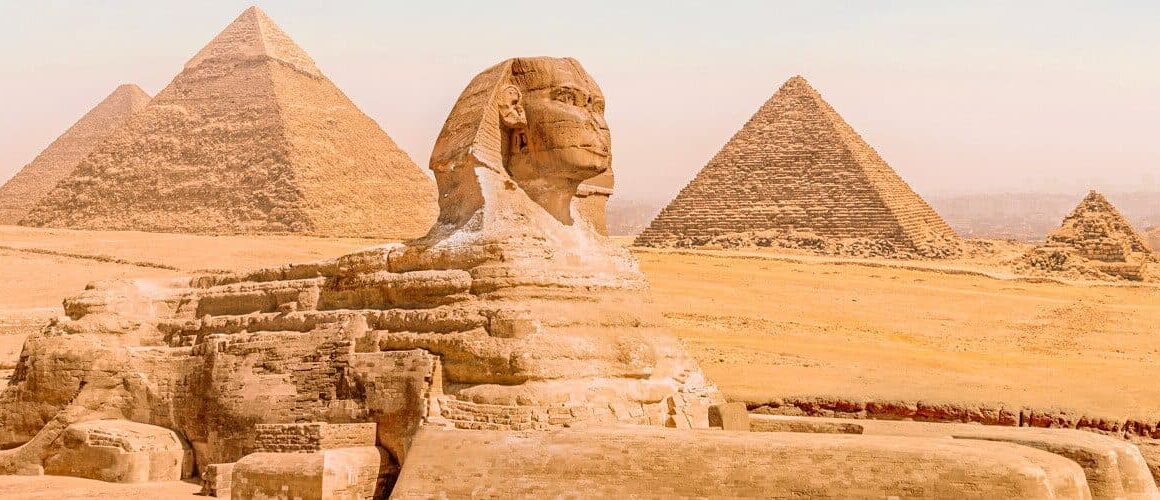
This is important for a site like cheops.org because it shows that modern projects do not merely preserve the pharaonic past. They actively reshape what parts of that past become visible and memorable. A colossal Ramses II statue in the entry sequence, panoramic proximity to the pyramids, themed galleries, and multimedia interpretation all guide attention in particular directions. Reuters reported that the monumental Ramses II statue now anchors the grand entry hall, while official visitor information emphasizes structured galleries and timed access. These are not neutral details. They influence what visitors feel ancient Egypt is about.
The Grand Egyptian Museum is also part of a broader strategy to use modern heritage projects to revitalize tourism and public cultural interest. Reuters reported that Egypt hoped the museum would accelerate a tourism revival, while AP noted expectations of millions of annual visitors and daily capacity limits aimed at managing the experience. Euronews, writing in March 2026, linked the museum’s opening to a wider story about how Egypt’s modern attractions are bringing its ancient past to life. That broader framing matters because ancient heritage is increasingly being positioned not only as national memory, but as an active driver of economic and cultural visibility.
At the same time, the museum’s impact is not purely economic. It changes public hierarchy within Egyptian heritage. For many international visitors, “ancient Egypt” often meant pyramids, mummies, and Tutankhamun. The new museum reinforces some of those expectations, but it also has the power to broaden them by reorganizing chronology and context. TIME’s 2026 feature notes that the museum houses around 100,000 artifacts representing 7,000 years of history. That scale gives curators the opportunity to move visitor attention beyond the most famous objects and toward a more continuous understanding of Egyptian civilization.
There is also a symbolic dimension. The Grand Egyptian Museum opened after two decades marked by delays tied to political, economic, and regional instability, according to Reuters and other coverage. In that sense, the museum has become part of a modern Egyptian narrative about endurance, national image, and cultural ambition. It is not only a museum about the ancient state; it is also a modern state project about how Egypt wants its antiquity seen now.
What makes 2026 especially interesting is that the museum is arriving at a moment when audiences expect more than passive viewing. Official museum platforms emphasize events, programmes, temporary exhibitions, and mixed-reality experiences. Modern heritage projects increasingly compete not just with other museums, but with every other attention environment people inhabit. That pushes institutions to think in terms of return visits, layered interpretation, family programming, and digital discoverability. Ancient history is still the core content, but it is being delivered through modern attention logic.
For readers interested in ancient Egypt, this creates both an opportunity and a tension. The opportunity is obvious: more access, more visibility, better interpretation, and a stronger chance that people who once thought of Egypt only through clichés will encounter a fuller historical world. The tension is that modern presentation always shapes perception. Heritage becomes easier to enter, but also more curated, more theatrical, and more dependent on institutional framing. Still, the broader result in 2026 is clear. The Grand Egyptian Museum and related modern projects are not distracting the public from the pharaonic past. They are reorganizing public attention around it. They make ancient Egypt newly legible for a contemporary audience that expects immersion, clarity, and narrative scale. In doing so, they ensure that the pharaohs, their monuments, and their material world remain not only historically important, but culturally present.