The pyramids remain one of the most enduring enigmas of history. Silent for millennia, they still demand an answer: why were these monumental stone structures built? Explanations range from tombs to temples, even precise astronomical instruments. Understanding their purpose offers insight into a civilization capable of measuring time, asserting power, and contemplating death with astonishing sophistication.
The Context of Construction and the Scale of the Undertaking
Egyptian pyramids did not emerge spontaneously. Their construction relied on a combination of economic planning, religious doctrine, and engineering expertise. Stone was quarried centrally, labor was organized by the state, and designs adhered to strict architectural principles. The scale of these projects suggests a purpose far beyond a private cult.
Over the early dynastic centuries, the mastaba evolved into the Step Pyramid of Djoser and eventually into the smooth-sided pyramids of the Fourth Dynasty. This progression reveals deliberate intent rather than improvisation, a steady pursuit of an ideal form.
Theory One: Pyramids as Pharaohs’ Tombs
For a long time, this hypothesis was considered foundational and rarely questioned. It aligns with the ancient Egyptians’ beliefs regarding the afterlife and the pharaoh’s divine status. In this context, a pyramid was not merely a structure but a transitional space designed to preserve the ruler’s body and ensure eternal existence. The complexity of interior chambers and the multi-layered corridor systems reinforces this interpretation.
Archaeological Evidence
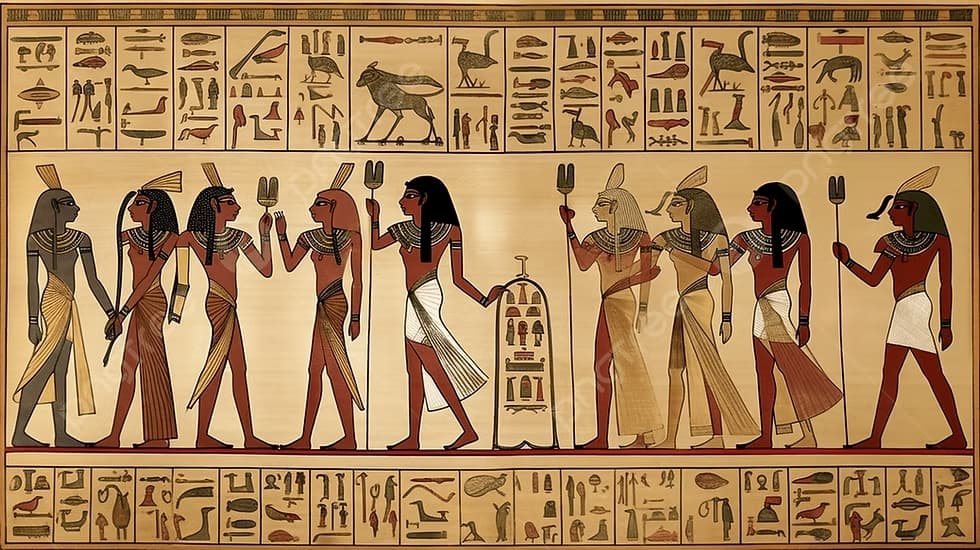
This tomb theory is supported by tangible evidence. Burial chambers, stone sarcophagi, and ritual objects characteristic of funerary cults have been discovered inside pyramids. Pyramid texts inscribed on walls describe the pharaoh’s journey to the gods, confirming the structures’ connection to mortuary practices. Adjacent temple complexes and boat pits, designed to symbolically transport the ruler in the afterlife, further substantiate the funerary function.
Challenges to the Tomb Theory
Despite its appeal, the tomb hypothesis faces significant questions. In the Great Pyramids, pharaohs’ mummies are absent, and chambers are often empty. This suggests either ancient looting or that burial was not the primary function of these edifices.
Theory Two: Pyramids as Cultic Temples
Pyramids may have served not only as tombs but also as centers of ritual activity. Their upward-pointing form symbolized the primordial hill, Ben-Ben, from which the world emerged, linking the earthly and celestial realms. In this context, they functioned as active spaces where humans and the divine interacted.
Ritual Role and Symbolism
In Egyptian cosmology, the pharaoh became a god upon death, and the pyramid acted as a stairway to the heavens. Internal chambers may have been designed for ceremonial purposes rather than interment. The positioning of associated temple complexes indicates a permanent priestly presence, maintaining ongoing ritual functions.
Connection to Cults and Priesthood
The pyramids’ economy was supported through offerings and land endowments tied to the cults of deceased rulers. This reinforces the notion of pyramids as active religious centers rather than sealed monuments.
Theory Three: Pyramids as Astronomical Instruments
Some researchers interpret the pyramids as precise astronomical tools. Their geometry and orientation to cardinal points reveal systematic knowledge of celestial movements and calendrical cycles.
Orientation and Precision
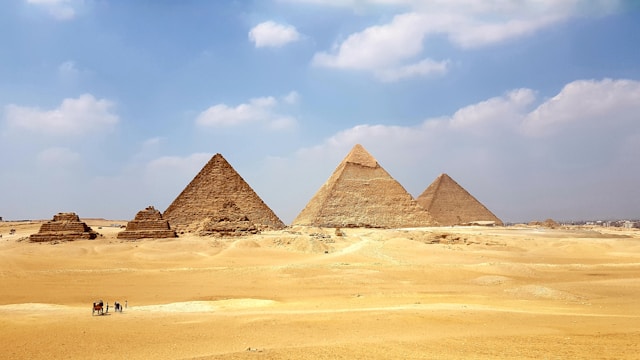
The Great Pyramid of Khufu is aligned to the cardinal directions with accuracy comparable to modern surveying techniques. Internal shafts point toward specific stars associated with the Egyptian afterlife mythology, such as Orion, linked to Osiris, the god of resurrection.
Pyramids as Timekeeping Instruments
Hypotheses suggest pyramids could track solstices and equinoxes. Shadows cast by their edges might have functioned as calendars, guiding agricultural cycles and ritual festivals. As a contemporary parallel in gaming, one can examine the Ganesha Fortune demo, where logic and mythology intertwine—much like stars and stone did in ancient times.
| Criterion | Tomb | Temple | Astronomical Instrument |
| Archaeological Evidence | Sarcophagi, texts | Temple complexes | Orientation, shafts |
| Religious Context | Funerary cult | Solar cult | Cosmology |
| Technical Complexity | High | High | Extremely high |
| Weak Points | Lack of mummies | Unclear chamber function | Scarcity of direct sources |
Why a Single Explanation Falls Short
Choosing a singular purpose oversimplifies reality. Ancient Egyptians conceived of life and death holistically, without rigid separations between science, religion, and power. A pyramid could simultaneously serve as a tomb, a temple, and an astronomical marker.
Economy, Power, and Demonstration of Control
Pyramids were also a political statement, demonstrating the pharaoh’s absolute authority and the state’s capacity to mobilize resources. They broadcast order and power, much like large-scale modern projects enhance brand recognition and public trust.
Modern Scientific Perspectives
Contemporary research employs laser scanning, satellite imagery, and microgravity surveys. Discovery of hidden voids within pyramids confirms a complexity previously unrecognized, supporting the multi-functional theory.
Egyptian Enigma
The purpose of pyramids cannot be reduced to a single function. They are a nexus where faith, mathematics, and political authority converge. Understanding this multi-layered intent provides a lens for viewing ancient civilizations and modern systems alike, where symbolism and calculation coexist. Studying pyramids is an investment in understanding the logic of large-scale projects and long-term planning.